

If you're choosing new floors in Western North Carolina, there's a good chance luxury vinyl plank (LVP) and hardwood both made your shortlist. From across the room they can look surprisingly alike. Underfoot, and over the years, they behave very differently. Here's how LVP vs. hardwood flooring compares, room by room and season by season.
The Short Answer
Choose hardwood for main living areas where you want a floor that can last for generations, be refinished, and add value to your home. Choose LVP for basements, mudrooms, bathrooms, laundry rooms, and anywhere water is a real risk. For a lot of homes in the mountains, the best answer is both: hardwood where you live, LVP where it gets wet.
How LVP and Hardwood Are Built
Luxury Vinyl Plank
LVP is a layered synthetic floor. A rigid or flexible core sits under a high-definition printed layer that reproduces the look of wood grain, topped by a clear wear layer that takes the daily abuse. Better products add embossed texture that lines up with the printed grain, so the boards feel like wood underfoot. Most LVP installs as a floating floor with click-lock edges.
The wear layer is measured in mils. Thicker means more resistance to scratches and scuffs. The planks in our luxury vinyl collection carry 20 mil and 30 mil wear layers.
Hardwood
Hardwood is real wood all the way through the visible surface. It comes as solid boards or as engineered hardwood, which bonds a real wood wear layer to a stable core. If you're still weighing those two, our guide to engineered vs. solid hardwood flooring covers how each handles mountain conditions.
Water and Moisture: LVP's Biggest Advantage
This is the clearest difference between the two. The LVP we carry is 100% waterproof. Spills, wet boots, pet accidents, and a leaking dishwasher sit on the surface without swelling the planks.
Hardwood's finish protects against spills that get wiped up quickly, but standing water and slow leaks are another story. They can cause cupping, staining, and boards that need to be replaced.
One caution: a waterproof plank is not a waterproof room. Water that gets under a floating floor, through the edges or up from a damp slab or crawlspace, can lead to mold and odor underneath. Subfloor prep and moisture control still matter with LVP.

Mountain Humidity and Temperature Swings
Humid summers and dry, heated winters make wood expand and contract. That's why hardwood in the mountains needs proper acclimation, steady indoor conditions, and the right construction for the space.
LVP doesn't absorb moisture, so seasonal humidity swings don't cause the gapping and cupping wood can show. That makes it appealing for cabins and second homes where the heat or air conditioning gets turned down between visits.
Vinyl does react to temperature, though. It expands in heat and contracts in cold, so large floating floors need proper expansion gaps. Intense afternoon sun through big windows and rooms near a wood stove can push some products past their limits, and many manufacturers list temperature ranges for unheated spaces. If your cabin sits unheated all winter, check the product specs before you buy.
Durability: Scratches, Dents, and Dogs
LVP resists scratches and stains well, which makes it a favorite for families with kids and dogs coming in off muddy trails. It isn't indestructible. Heavy furniture can leave dents, sharp objects can gouge it, and damage can't be sanded out. A badly damaged plank has to be replaced, so keep a spare box from your install.
Hardwood's scratch and dent resistance depends on the species and the finish. It will show wear over time, but most of that wear can be buffed out, recoated, or sanded away.
Refinishing and Lifespan: Where Hardwood Wins
A hardwood floor can be renewed. Solid hardwood can be sanded and refinished many times, and engineered hardwood can be refinished depending on its wear layer thickness. A worn floor can be brought back with dustless refinishing, and you can change the stain color along the way.
LVP can't be refinished. What you install is what you live with, and when the wear layer is worn through, the floor gets replaced. A well-kept hardwood floor can last for decades, often for the life of the home.

Look and Feel
Today's LVP is convincing, especially in photos. Up close, a few differences show. Printed patterns can repeat across planks. Floating floors can sound hollow or clicky underfoot. And vinyl feels harder and cooler than wood.
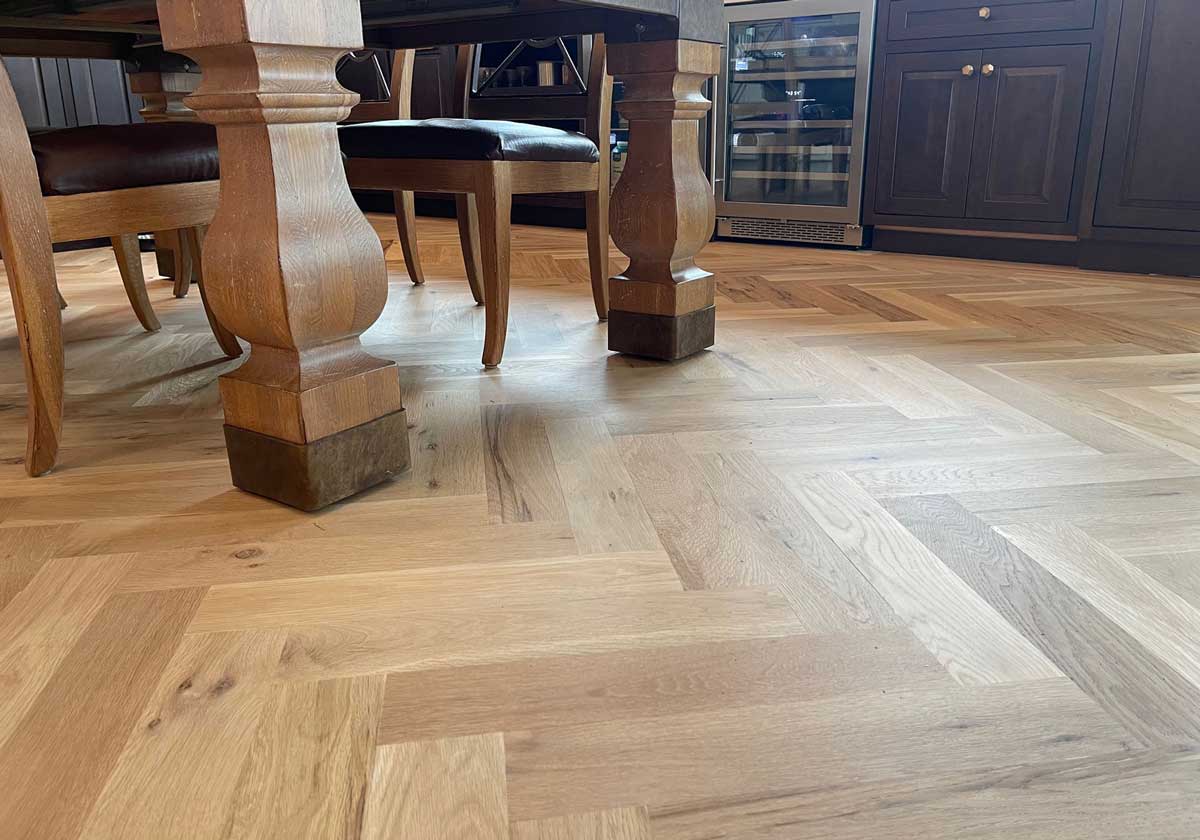
Hardwood has natural variation that never repeats, a warmer feel, and a surface that ages with your home. Unfinished hardwood can also be stained on site to almost any color you want.
Resale Value
Many buyers see hardwood as a premium feature, and listings call it out by name. LVP is widely accepted too, especially in basements, kitchens, and rental properties. A good rule of thumb: hardwood in the main living areas protects your home's value, and LVP makes sense where water would turn hardwood into a liability.
What About Cost?
LVP usually costs less than hardwood up front, for both materials and installation. Premium LVP with a thick wear layer narrows that gap. Hardwood's ability to be refinished instead of replaced also changes the long-term math. The only way to compare real numbers for your home is a measured estimate.
LVP vs. Hardwood at a Glance
- Material: LVP is synthetic with a printed wood look. Hardwood is real wood.
- Water: LVP planks are waterproof. Hardwood handles quick spills, not standing water.
- Humidity swings: LVP doesn't absorb moisture. Hardwood moves with the seasons.
- Temperature: LVP can expand in strong heat and sun. Hardwood is less sensitive to heat alone.
- Scratches: LVP resists them well. Hardwood shows wear but can be renewed.
- Refinishing: LVP cannot be refinished. Hardwood can.
- Resale: Hardwood is the stronger selling point in main living areas.
- Upfront cost: LVP is usually lower.
The Best Answer Is Often Both
You don't have to pick one floor for the whole house. Many Western NC homes use LVP in the mudroom, basement, bathrooms, and laundry room, and hardwood in the living room, dining room, and bedrooms. When you combine them, plan the transitions at doorways so floor heights line up. Choose an LVP tone that complements your hardwood rather than trying to match it exactly. A close match that's slightly off tends to look like a mistake, while a deliberate contrast looks designed.
Which One Is Right for Your Home?
Choose LVP if:
- The room is a basement, bathroom, laundry room, or mudroom
- You have large dogs, young kids, or heavy foot traffic from outdoors
- It's a cabin or rental where conditions aren't always controlled
- Upfront budget is the main deciding factor
Choose hardwood if:
- The room is a main living area, dining room, or bedroom
- You plan to stay in the home for years and want a floor you can refinish
- Resale value matters to you
- You want the natural look and feel only real wood provides
How Arbor Zen Helps You Choose
We carry both, so we can recommend what fits your home instead of whatever we happen to stock. Our luxury vinyl flooring collection includes waterproof planks from Canopy Floors and International Flooring Company in 20 mil and 30 mil wear layers. Our prefinished hardwood collection includes solid and engineered options from brands like Hallmark Floors, RIVA, Allwood, and Palmetto Road.

Order samples for $5.99 each to see them in your own light, or compare LVP and hardwood side by side at our showrooms in Black Mountain and Conover. Every project starts with a free consultation, where our team looks at your space and subfloor and helps you choose the right floor for each room.
Frequently Asked Questions
Is LVP cheaper than hardwood?
Usually, yes, for both materials and installation. Premium LVP with a thicker wear layer costs more than entry-level products, and hardwood can be refinished instead of replaced, which matters over the long run. A free estimate gives you real numbers for your space.
How long does installation take?
LVP is generally faster to install because the planks click together and need no on-site finishing. Hardwood needs 5 to 7 days of acclimation first. After that, prefinished hardwood typically installs in 2 to 4 days, and unfinished hardwood that's sanded and finished on site typically takes 5 to 10 days.
Is LVP better than hardwood for dogs?
For scratch resistance and accidents, LVP has the edge. Its wear layer resists claw marks, and its waterproof planks shrug off messes. Hardwood will show more wear from big dogs, but that wear can be refinished, while damaged LVP planks have to be replaced.
Does LVP hurt resale value?
Not in the right rooms. LVP in a basement, mudroom, or bathroom is widely accepted by buyers. In main living areas, many buyers still expect hardwood and see it as a premium feature.
How do I clean LVP compared to hardwood?
Both do best with regular sweeping or vacuuming and a cleaner approved by the flooring manufacturer. LVP tolerates damp mopping. Hardwood should never be wet-mopped. Avoid steam mops on either floor. For more tips, read our hardwood floor care guide.
Where can I see LVP and hardwood samples near Asheville?
Visit our showrooms at 116 Montreat Rd in Black Mountain, about 20 minutes east of Asheville, or at 301 10th Street NW, Building D, Unit 101 in Conover. You can also order samples online for $5.99 each.
Get Expert Advice Before You Buy
The right floor depends on the room, how you live, and what's under your feet. Schedule a free estimate and we'll assess your space, check your subfloor, and help you decide where LVP, hardwood, or both make the most sense. Call 828.528.3150 or book a free consultation online.
Share:
Engineered vs. Solid Hardwood Flooring for Western NC Mountain Homes